-
-
-
-
-
-
-
-
-
-
-
-
-
-
-
Communities
Community Outcome: Otago has cohesive and engaged communities that are connected to the environment and each other.
Relevance
Trust and satisfaction are important because they determine whether our communities feel confident in the work we do and the outcomes we deliver. We can’t make progress on the issues facing the region on our own; we rely on communities to work alongside us. This requires a strong relationship with communities that is grounded in trust, transparency and shared responsibility. People need to know that our decision-making processes are fair, that we act in their best interests, and that the results we deliver will benefit the whole region. This is why keeping communities at the centre of our work is so important.
Keeping communities at the centre of our work doesn’t mean every decision will make everyone happy. It means we will focus on building and maintaining trust and satisfaction, and ensure people feel heard, respected and informed. We aim to improve our community engagement by listening more carefully and communicating more clearly, especially when decisions are difficult or unpopular. Strengthening trust and satisfaction in this way will lead to better outcomes for communities and the region as a whole.
Current situation
Summary
Community trust in ORC is rising, with strong satisfaction in our work.
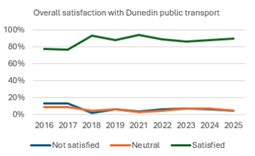
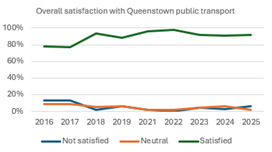
Over the past few years, feedback from surveys shows that people’s trust in ORC is growing. This improvement follows a period of lower trust, and current results suggest confidence is rebuilding. More residents are saying they are satisfied with ORC overall, and 2023 saw a lift in positive views compared with recent years. Satisfaction is especially strong among people who interact directly with ORC services, with consistently high customer satisfaction scores, and very high satisfaction with public transport services in both Dunedin and Queenstown.
At the same time, the surveys highlight that rebuilding trust is an ongoing process. Many people remain neutral about ORC overall, and fewer residents feel confident they are receiving good value for money. Feedback also points to opportunities to strengthen how ORC communicates with communities, increases its visibility, and supports better connections between people and groups across the region.
We have opportunities to work more closely with communities by building on their strengths. This means empowering people to shape solutions themselves, recognising that lasting change comes from within communities, not from outside experts alone.
Taken together, these insights help build a clearer picture of how communities currently experience ORC and where expectations are evolving. They provide guidance on where ORC can focus next, building on what’s working well while improving the perceived value ORC delivers for Otago.
Supporting information
Community Survey (2021 - 2023)
- Performance: In 2023, respondents felt ORC performed best in managing the region’s air quality (35%), managing the region’s waterways (34%), ensuring land-based activity does not affect the environment (31%), and protecting the region’s coastal resources (30%). All measures saw gradual increases in satisfaction over time.
- Delivery: In 2023, respondents felt ORC delivered best through the provision of information (33%) and by working with people to enhance the environment and liveability (30%).
- Reputation: In 2023, respondents felt that ORC earned a good reputation through the provision of information (41%) and from being trustworthy (35%). Only 21% of respondents, however, agreed that ORC provides value for money for residents.
- Overall satisfaction: 2023 year saw a significant increase in overall satisfaction with ORC, with a 5% raise in satisfaction ratings since 2022.
Customer Satisfaction Survey: This has a target of 85% and currently sits at a rolling monthly average of 92%. The rating has not dropped below 88% since the start of the reporting period (July 2023).
Bus Satisfaction Survey (2016 – 2025): Overall satisfaction with the public transport system for users in Dunedin is sitting at 90%, and 92% in Queenstown. This satisfaction rating has been trending upwards overall since 2016.
How is it measured
- Annual / Biannual Community Survey (last completed in 2023)
- Customer Satisfaction Survey – collected immediately following customer interactions (rates, consents, transport, Total Mobility, customer service)
- Annual Bus Satisfaction Survey (last run May-June 2025)
Relevance
Public participation strengthens our communities by creating a sense of collective responsibility and connection to our environment and each other. When more people participate, they contribute to addressing our region’s challenges by ensuring ORC’s work draws on the strengths of our communities while reflecting their needs.
We live in a diverse region with lively cities, small rural towns and rapidly growing suburbs. People in these places experience ORC’s work in different ways, whether through pest management, public transport, or other services. Because of this, we need to make sure we’re not just engaging with a small slice of the population. It’s essential that we engage with everyone, including those who often feel their voices are not hear, such as people in rural areas, people on low incomes, youth people with disabilities and Māori and Pasifika communities. When we listen to this full range of perspectives, we create fairer, more effective outcomes that benefit everyone in the region.
Current situation
Summary
Public participation in Otago is mixed, with significant opportunities to broaden involvement and reach more diverse people.
In Otago, as across much of New Zealand, getting involved in local government through voting and public feedback remains a key part of community life but participation levels are still a mixed story. Local election participation in 2025 was generally lower than many would like, though there were signs of increased early voting compared with past elections as interest rose in local issues like rates and council priorities.
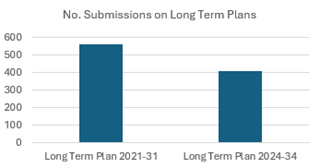
Engagement through submissions and community consultation in Otago shows active pockets of great involvement but also ongoing challenges in reaching wider and more diverse participation. For example, on the Otago Regional Council’s Long-Term Plan in 2024, just over 400 people from across the region took the time to make submissions. Similarly, 165 people made submissions on a representation review earlier the same year, giving detailed views on how they want local decision-making arranged. Some community engagement projects like the South Dunedin Future programme, however, attracted strong interest from more than 1,200 individuals and organisations through workshops, surveys and drop-in events, showing what is possible when people feel a topic directly affects them.
Still, there are ongoing challenges and opportunities. Getting a broader range of people (especially younger residents and those from more diverse backgrounds) involved in voting and decision-making remains a hurdle. Building deeper, more accessible engagement opportunities and clear communication about how decisions affect everyone could help more people feel confident having their say and taking part in local democracy. When councils make it easy to participate in ways that matter to people’s lives, participation rises, and local decisions better reflect the whole community.
Supporting information
Voter turnout
| Constituency | 2022 voter turnout | 2025 voter turnout |
|---|---|---|
| Dunstan | 20,498 | 20,569 |
| Moeraki | uncontested | 73,09 |
| Molyneux | 15,181 | 12,283 |
| Dunedin | 39,572 | 30,262 |
| Total | 75,251 | 70,423 |
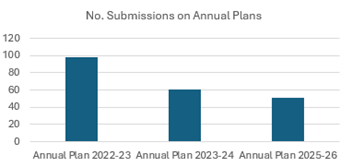
Long term and annual plans: The number of submissions received on ORC’s long-term plan and annual plans has been in decline over the past 4 years.
Visits to ORC’s website
The number of visits to ORC’s website, the number of users of the website, and the duration of each session have been consistent over the past three years.
| Metric | 2025 | 2024 | 2023* |
|---|---|---|---|
| Views | 4,045,178 | 4,084,108 | 3,392,610 |
| Number of users | 795,051 | 712,001 | 546,813 |
| Views per user | 5.09 | 5.74 | 6.2 |
| Average session duration | 3m 17s | 3m 18s | 3m 35s |
How is it measured
- Voter turnout data
- Number of submissions on ORC’s draft Long-term Plans and Annual Plans
- Number of visits to ORC’s website
- Surveys to gauge how people feel their input has influenced council decisions (data set being developed)
- Attendance numbers at strategic events (data set being developed)
- Demographics of those making submissions (data set being developed)
Relevance
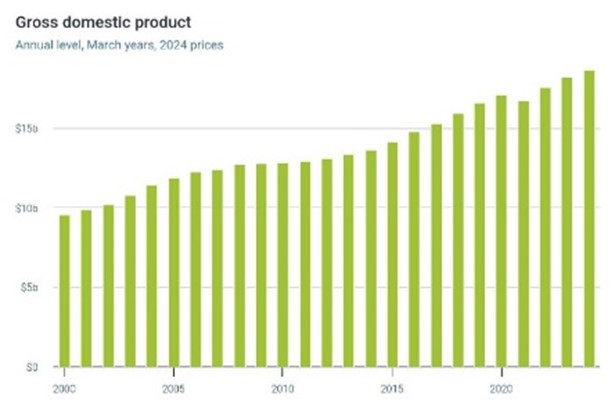
When expressed as Gross Domestic Product (GDP), the prosperity of a region reflects the total value of goods and services produced in that area over time. A higher regional GDP generally indicates stronger economic performance, more employment opportunities, and better living standards for local communities.
Regional councils play a crucial role in supporting and influencing economic prosperity by managing resources, infrastructure, and environmental sustainability. These factors directly affect local productivity and growth. For example, councils invest in transport networks, support sustainable land use, and help attract new industries or tourism, all of which contribute to GDP growth. By analysing regional GDP data, ORC can identify strengths and challenges within the region, allowing us to promote balanced and long-term prosperity.
Current situation
Summary
Economically, Otago has been showing positive signs in recent years, but there is growing inequality.
Supporting information
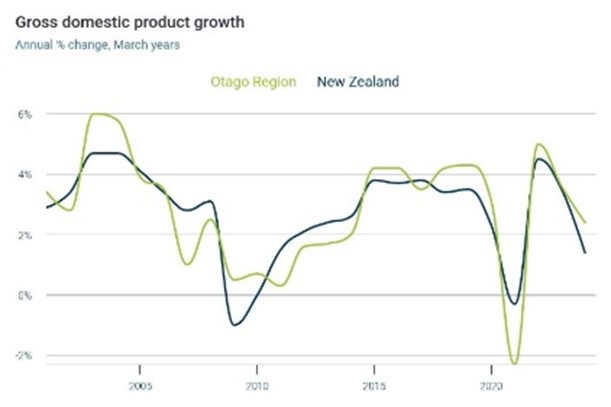
Otago’s economy has performed strongly in recent years. GDP in the Otago Region reached $18,646.8 million in the year to March 2024, an increase of 2.4% from the previous year. This growth exceeded the national average of 1.4%. Over the ten years to 2024, economic growth in Otago averaged 3.2% per annum, slightly higher than the New Zealand average of 3.0%. In 2024, Otago accounted for 4.5% of New Zealand’s total GDP.
GDP per capita in Otago was $73,878 in 2024, which remains below the New Zealand average of $79,173. However, GDP per capita growth in Otago was 0.9% in the year to March 2024, outperforming the national trend, which recorded a decline of -0.3%.
The region has also performed well in quarterly regional economic scoreboards, supported by strong activity in sectors such as accommodation and food services, tourism, construction, and retail. Unemployment in Otago has remained relatively low (for example, approximately 2.8% in 2022), and youth NEET (not in employment, education or training) rates are lower than the national average.
Despite these strengths, structural challenges remain. Median household income in Otago is below the national median, and GDP per capita continues to lag behind the New Zealand average. Overall, Otago’s economy is growing and performing well in key sectors, but inequality and longer-term productivity challenges remain important issues for the region.
How is it measured
- Gross Domestic Product (GDP)
- GDP per capita


